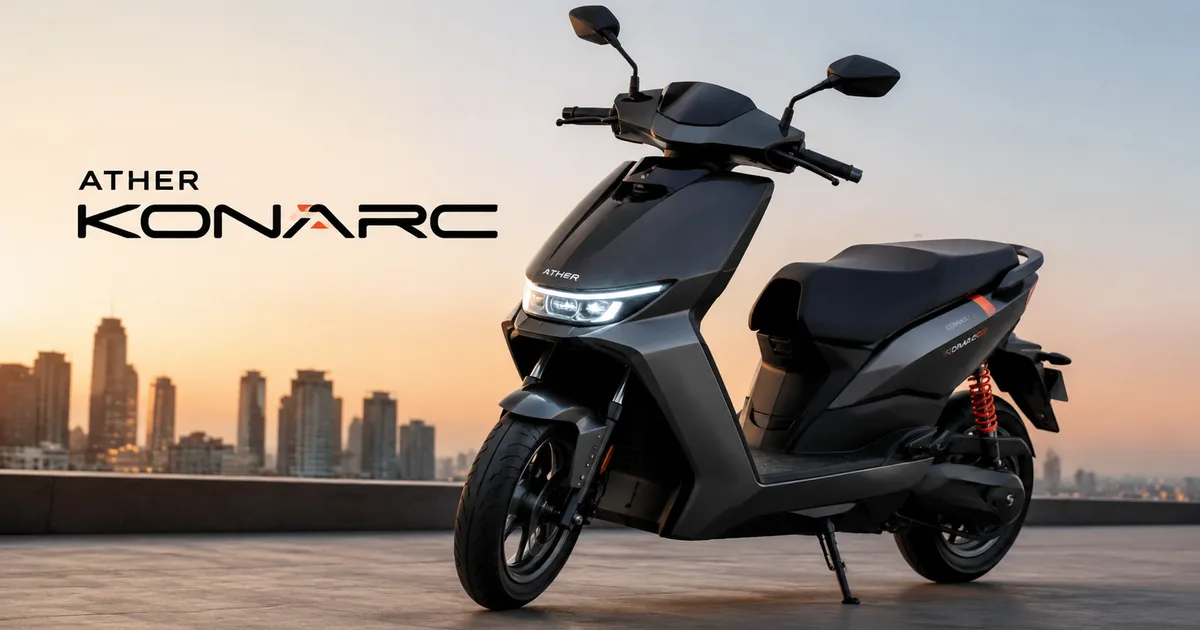
So, the Ather Konarc 2026 India launch just happened, and honestly, it's exactly what the EV market needed right now. Look, I've always been a fan of what Ather does. They build solid, well-engineered scooters. But they were always a bit of a premium purchase. Not everyone has Rs 1.5 lakh sitting around for a daily commuter.
Thing is, with the Konarc, Ather is finally going after the mass market. They've priced it starting at Rs 99,999. And that changes the math completely for a lot of buyers who were on the fence about switching to electric.
If you've been following the latest tech news, you know 2026 is shaping up to be a massive year for EVs in India. We're seeing aggressive pricing across the board, from two-wheelers all the way up to cars like the upcoming Tata Curvv EV. But scooters are where the real volume is in India. And this is Ather's big play for those volumes.
Ather Konarc Price in India: Breaking Down the Numbers
Let's talk about the money first. It's what actually matters when you're buying a commuter scooter.
The Ather Konarc launched in India at a starting price of Rs 99,999 (ex-showroom). That is an aggressive price point for Ather. This puts it directly in competition with higher-end petrol scooters like the Activa 125 or TVS Jupiter. And it's right in the crosshairs of Ola's mass-market lineup.
Ather has the Konarc in a couple of different trims, mainly the S and Z variants. The base model hits that Rs 1 lakh mark. But obviously, if you want the higher range or the extra smart features, you'll pay a bit more. I'm not sure exactly why the official on-road pricing for every state isn't totally clear yet. EV subsidies vary wildly between Maharashtra, Delhi, and Karnataka (which makes sense, actually). You should expect the on-road price for the base model to be around Rs 1.10 to 1.15 lakh depending on where you live. In my experience, dealers usually tack on extra handling fees anyway.
Battery, Range, and Charging: No More Range Anxiety
Range anxiety is the biggest reason people in India hesitate to buy an EV. You just don't want to be stuck on the side of the Outer Ring Road with a dead battery.
Here's the deal with the battery setup. Ather has multiple battery options. The standard setup claims an IDC (Indian Driving Cycle) range of up to 161 km on a single charge. We all know IDC numbers are tested in perfect conditions. In the real world of Bangalore traffic or Mumbai potholes, you can safely expect about 110 to 120 km of TrueRange. I think that's actually a good thing for a daily commute. It's more than enough.
But Ather didn't stop there. They've confirmed a higher-capacity battery version that can push the range up to 200 km. If you have a long commute from Gurgaon to Noida and back, that 200 km variant is the one you want to look at.
And charging? They've integrated a 450W charger directly into the scooter. This is a big deal.
You don't have to carry a bulky external brick around in your boot anymore. You just need the cable. You can plug it into any standard 15-amp socket at your office parking or apartment basement.
"Ather Energy launches affordable Konarc electric scooter with multiple battery options (100-200 km range), metal body, built-in 450W charger, and advanced AeBS braking technology starting at Rs 99,999." - Cartoq
Design and Build: Why a Metal Body Matters
I need to talk about the build quality. This is where Ather is throwing shade at the competition.
The Konarc comes with a metal body. Most electric scooters today are entirely plastic. Plastic is fine. It's light and cheap. But in India, scooters get bumped. They get scratched in tight parking spots and dinged by auto-rickshaws. A metal body just holds up better over five or six years of hard use. It gives the scooter a solid, planted feel. Traditional buyers really want that solid feel.
Plus, they've carved out a massive 31-litre boot space. You can fit a full-face helmet in there. You can fit your groceries or a small laptop bag. It's practical. Practicality sells in this segment, if you ask me.
Smart Features and Performance
It is their budget scooter. But that doesn't mean it's slow. The Konarc has a motor with up to 4.7kW of peak power. It won't win drag races. But it is peppy enough for quick overtakes in city traffic.
Here are the standout features you actually need to care about:
- Metal Body Construction: Tougher, more durable, and built for Indian road conditions.
- 31-Litre Storage: Massive under-seat boot space for full-face helmets and groceries.
- Integrated 450W Charger: No more carrying bulky charging bricks. Just plug the cable directly into a 15-amp socket.
- AeBS Braking: Advanced electronic braking keeps you safe on wet and slippery roads.
Ather also threw in their advanced AeBS (Advanced Electronic Braking System) technology. Basically, this prevents the wheels from locking up during hard braking. That is a lifesaver on wet Indian roads during the monsoon.
And of course, it's an Ather. So you get the smart dashboard. You get the app connectivity, the ride statistics, and the over-the-air updates. All the tech stuff that Ather is known for is still here, just packaged in a more accessible scooter. If you love digging into how this kind of tech works behind the scenes, you should check out some of our tech explainers.
The Secret Weapon: The Ather Grid Fast Charging Network
There's one massive advantage Ather has over almost everyone else in the market. That is the Ather Grid.
When you buy a Konarc, you aren't just buying the scooter. You're buying into their charging ecosystem. Ather spent years quietly building out one of the most reliable fast-charging networks in India. You'll find these chargers at cafes and tech parks across major cities like Bangalore or Delhi.
Why does this matter for a commuter scooter? Because life happens. Maybe you forgot to plug it in last night, or maybe you have an unexpected errand across town. With the Ather Grid, you can pull up to a charger and plug in for 15 or 20 minutes. You grab a coffee and get enough range to get home safely.
Unlike some competitor networks where half the chargers are offline or a mess, Ather's network actually works most of the time. You can check the real-time status of chargers right from their app before you even leave home (annoying when apps crash, I know, but theirs is decent). This peace of mind is incredibly valuable. It is something that spec sheets often ignore. When you combine the Konarc's 161 km range with the backup of the Ather Grid, range anxiety basically goes away.
How Does It Stack Up Against the Competition?
You can't talk about the Konarc without talking about Ola Electric. Ola has absolutely dominated the sub-1-lakh EV market for the last couple of years.
But Ola has faced some criticism about build quality and after-sales service. This is exactly where Ather sees its opening. Ather's reputation for reliability and quality control is arguably the best in the Indian EV space.
If you put the Konarc next to an Ola S1 X or a TVS iQube, the Konarc feels more substantial thanks to that metal body. It feels like a vehicle that'll easily survive five years of daily abuse. TVS is doing a great job with the iQube. It's just a bit conservative in its design. The Konarc strikes a nice balance between looking modern and being incredibly practical.
Who Should Actually Buy the Ather Konarc?
Let's wrap this up with some actual buying advice.
If you're looking for an electric scooter right now, and your budget is around Rs 1 lakh, the Konarc has to be on your shortlist. It makes too much sense. You get Ather's proven battery tech, a sturdy metal body, and enough range for a week of short commutes. All of that is for the price of a high-end petrol scooter.
It's not for the track day enthusiast. It's for the guy taking his kid to school. It's for running errands and commuting 15 km to the office every day. It's a sensible, well-thought-out machine. Frankly, we need more of those in the EV space.
If you're still confused about whether to go electric or stick to petrol, take your time. Maybe you're looking at other options like the Kia Syros EV for a car instead. But the Konarc proves that good EVs are finally becoming affordable for the average Indian buyer.