Look, we all know the feeling of getting that automated SMS from the bank. The one cheerfully informing you that your home loan interest rate has been revised upwards. It usually ruins your morning tea. Today, October 7, 2026, millions of middle-class Indians are waiting for exactly that kind of news. Reserve Bank of India Governor Sanjay Malhotra is stepping up to the microphone at 10 AM to announce the RBI monetary policy October 2026 decisions.
Honestly, the suspense is heavy this time. After months of hitting the pause button, the Monetary Policy Committee (MPC) is facing a perfect storm of rising global crude prices and stubborn local inflation. (I'm not sure exactly why it's hitting so hard right now, but it is.) The financial news channels have been running breathless countdowns since Monday. But most of us don't care about macroeconomic charts. Or international bond markets. We care about our monthly household budgets. We want to know if that Rs. 40,000 EMI is about to jump to Rs. 42,000.
So, I'm going to break down exactly what the RBI is discussing right now. And I'll explain why a rate hike is heavily anticipated, plus how this directly hits your wallet and your savings.
What exactly is the repo rate?
Before we talk about the October 2026 decision, we need to cover the basic mechanics. Think of the Reserve Bank of India as the ultimate wholesaler of money in the country. Your local bank, whether that is SBI or HDFC, is the retail shop. When retail shops run out of inventory, they go to the wholesaler. When your bank needs cash to meet its lending requirements or manage daily operations, it borrows money from the RBI.
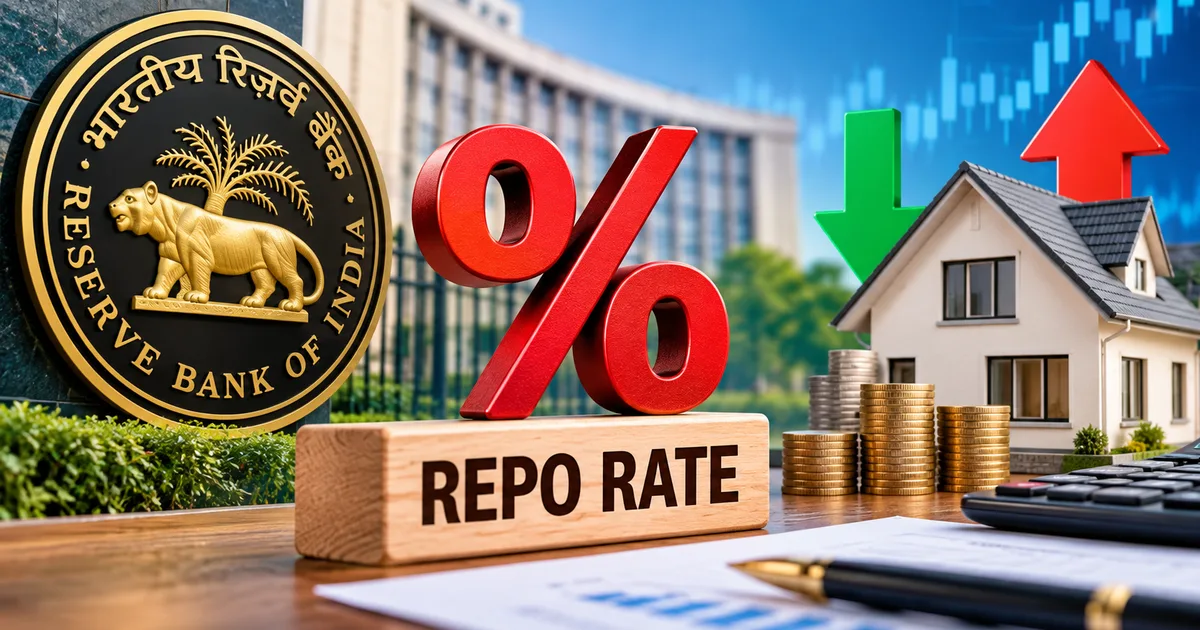
The interest rate the RBI charges your bank for this short-term loan is called the repo rate. That's literally it.
It's just the wholesale price of money. Now, if the RBI increases this wholesale price of money, your bank isn't going to absorb that extra cost out of the goodness of its heart. They immediately pass that burden down to you. They raise the interest rates on home loans and auto loans. Conversely, they also have to raise the interest rates they offer on fixed deposits to attract more cash from regular people like us.
In my experience, banks take weeks to increase fixed deposit rates. But they will hike your home loan EMI within twenty-four hours of an RBI announcement. That's the Indian banking system for you.
Why are we expecting a rate hike today?
We've had a fairly long stretch of stability. If you recall the August 2026 MPC meeting, the rates were kept unchanged at 5.25%. A lot of middle-class borrowers breathed a sigh of relief. People thought the worst of the rate-hike cycle was over. But macroeconomic conditions have changed rapidly in the last two months.
There are basically two major factors pushing the RBI toward a 25 basis points (which translates to 0.25%) hike today.
First, domestic retail inflation isn't cooling down fast enough. You've seen the prices of vegetables and milk at the local market. Tomato prices alone have been on a wild rollercoaster across Maharashtra and Karnataka. The retail inflation numbers are creeping uncomfortably close to the RBI's upper tolerance band of 6%. The central bank has a legal mandate to keep inflation near 4%. And right now, they're missing that target.
Second, global crude oil prices are surging again. The ongoing geopolitical tensions in West Asia have sent oil prices climbing past $90 a barrel. India imports more than 80% of its crude oil requirements, so this directly increases the cost of transport. Higher diesel costs for trucks mean higher prices for everything from farm produce to consumer electronics.
And let's not forget the US Federal Reserve. With the US Fed rate hike in September 2026, foreign investors often pull their money out of emerging markets like India to get safer returns in America. To stop this massive outflow of dollars (which makes sense, actually, to avoid a mess), the RBI has to raise its own interest rates. They have to keep Indian government bonds attractive to global investors.
According to CNBC-TV18, expectations of a rate hike are high. Banking stocks are already slipping in early trade on Dalal Street. Markets absolutely hate uncertainty.
How this impacts your home loan EMIs
Let's talk about the most painful part of this entire discussion. The home loan.
Most home loans in India are floating rate loans. This means they're tied directly to an external benchmark. That benchmark is almost always the RBI repo rate itself. When the repo rate goes up, your home loan interest rate goes up automatically.
Imagine you have a Rs. 50 lakh home loan for a tenure of 20 years. Let's say your current interest rate is 8.5%. Your monthly EMI is roughly Rs. 43,391. If Governor Sanjay Malhotra announces a 0.25% hike today, your interest rate jumps to 8.75%.
Your bank will usually do one of two things:
- Increase your monthly EMI amount. Your new EMI would become approximately Rs. 44,185. That's an extra Rs. 794 out of your pocket every single month, which adds up to nearly Rs. 9,500 a year.
- Keep your EMI the same but increase your loan tenure. Instead of finishing your loan in 20 years, you might end up paying it off in 21 or 22 years. You'll end up paying lakhs of rupees more in total interest to the bank over the extended life of the loan.
This is brutal for household budgets. We're already dealing with inflation on groceries and school fees. Adding another Rs. 1,000 to the monthly debt burden forces families to cut back on spending.
I strongly recommend logging into your bank's net banking portal tomorrow. Check your loan dashboard. If your tenure has been quietly extended to an absurd length like 28 or 30 years, you might want to manually instruct the bank to increase your EMI amount instead. Or, if you get a Diwali bonus next month, consider making a lump-sum prepayment to bring the principal amount down.
What happens to fixed deposits?
Here's the one piece of good news in this entire scenario. If you're a saver, a repo rate hike actually works in your favour.
When wholesale money becomes expensive for banks to borrow from the RBI, they turn to retail customers. They desperately need your deposits to fund their credit operations. To convince you to park your cash in a bank account instead of putting it into mutual funds or gold, they'll offer higher interest rates on Fixed Deposits (FDs) and Recurring Deposits (RDs).
We'll likely see major lenders like State Bank of India (SBI) and HDFC Bank tweak their FD rates upward within a few days. If you've been waiting to book a large FD, you might want to hold off until next week to lock in a higher interest rate. The numbers here are a bit fuzzy right now, but senior citizens will especially benefit from this upward adjustment.
The impact on tech, fintech, and digital lending
Since we're a tech platform, we have to look at how this impacts the digital ecosystem. Millions of Indians have started using Buy Now Pay Later (BNPL) services on apps like Swiggy and Zomato over the last few years. We also have countless instant personal loan apps offering fast cash via UPI.
These fintech companies borrow money from large banks or NBFCs to lend to you. When the RBI raises the repo rate, the cost of capital for these fintech startups goes up significantly. And they'll pass this cost onto users.
You might start seeing higher processing fees. Or steeper interest rates on those instant loans. If you regularly use credit lines on UPI apps, expect the terms and conditions to get a bit sketchy. The days of incredibly cheap digital credit might be pausing for a while.
The bigger picture for the Indian economy
The RBI doesn't make these decisions lightly. Raising interest rates is like pulling the handbrake on a speeding car. By making borrowing more expensive, the RBI deliberately slows down consumer spending. When people spend less money, the demand for goods drops. That drop in demand eventually forces prices to come down. That's exactly how central banks control inflation.
"The RBI has a dual mandate of controlling inflation while supporting economic growth. Right now, domestic inflation is the bigger monster, and the MPC has to slay it even if it means short-term pain for retail borrowers."
But there's a very high cost to this strategy. Corporate borrowing becomes expensive. If a manufacturing company in Tamil Nadu was planning to take a Rs. 100 crore loan to build a new factory, a higher interest rate might make that project financially unviable. They cancel the factory construction. Which means they don't hire those 500 local workers. Economic growth slows down across the board.
This also impacts consumer spending on big-ticket items. Car and two-wheeler sales might take a hit during the upcoming festive season because auto loan EMIs will become pricier. We might even see a slowdown in the real estate sector. Potential homebuyers often delay their purchases due to expensive home loans. The stock market reacts aggressively to these slowdown fears. We've already seen the Nifty and Sensex getting jittery.
Navigating the financial changes
So, what should an average Indian internet user do right now?
First, don't panic. The economy always moves in cycles. We're currently in a high-interest phase, but rates will eventually come down when inflation cools off. It's a waiting game.
Second, aggressively review your personal finances. If you have a high-interest personal loan or outstanding credit card debt, try to clear it as quickly as possible. Avoid taking on new debt right now. Use the extra interest income from your higher-yielding FDs to offset the higher cost of your home loan EMIs if possible.
Third, stay informed. The financial landscape is shifting incredibly fast. You can keep an eye on our Explainers section to understand these massive changes without having to decipher confusing financial jargon. We constantly break down how these big government decisions affect your day-to-day life. You should also check out our coverage on the latest news to stay ahead of the curve about digital payments.
We'll know the final verdict by 10 AM today. Governor Sanjay Malhotra will deliver his speech, and the MPC resolution will be published on the RBI website. The financial markets will react instantly. Whether it's a 25 bps hike or a surprise pause, the implications for the Indian middle class are massive. I'll be watching the announcement closely.
The reality is, managing money in India in 2026 is becoming a full-time job (annoying, I know). Between keeping your Aadhaar updated on DigiLocker and tracking these complex RBI updates, it takes real effort to protect your wealth. But understanding the basic mechanics of something like the repo rate gives you a massive edge.
Let's wait for the Governor's speech. Hopefully, the news won't completely ruin your morning cup of chai.