The reality of digital impersonation in 2026
Let us talk about a very specific nightmare currently hitting Indian phones. You pick up your phone. The screen shows your son, your boss, or your spouse. They look distressed. They need money right now for a medical emergency or a stalled business deal. But it is not them. Deepfake WhatsApp video call scams are draining bank accounts across India in 2026. The technology behind them is cheap, accessible, and highly effective against ordinary people.
This is a growing threat for professionals, business owners, and parents. Scammers no longer rely on badly written text messages. They use live video to weaponize your natural instinct to help your loved ones or obey your boss.
What exactly is this scam?
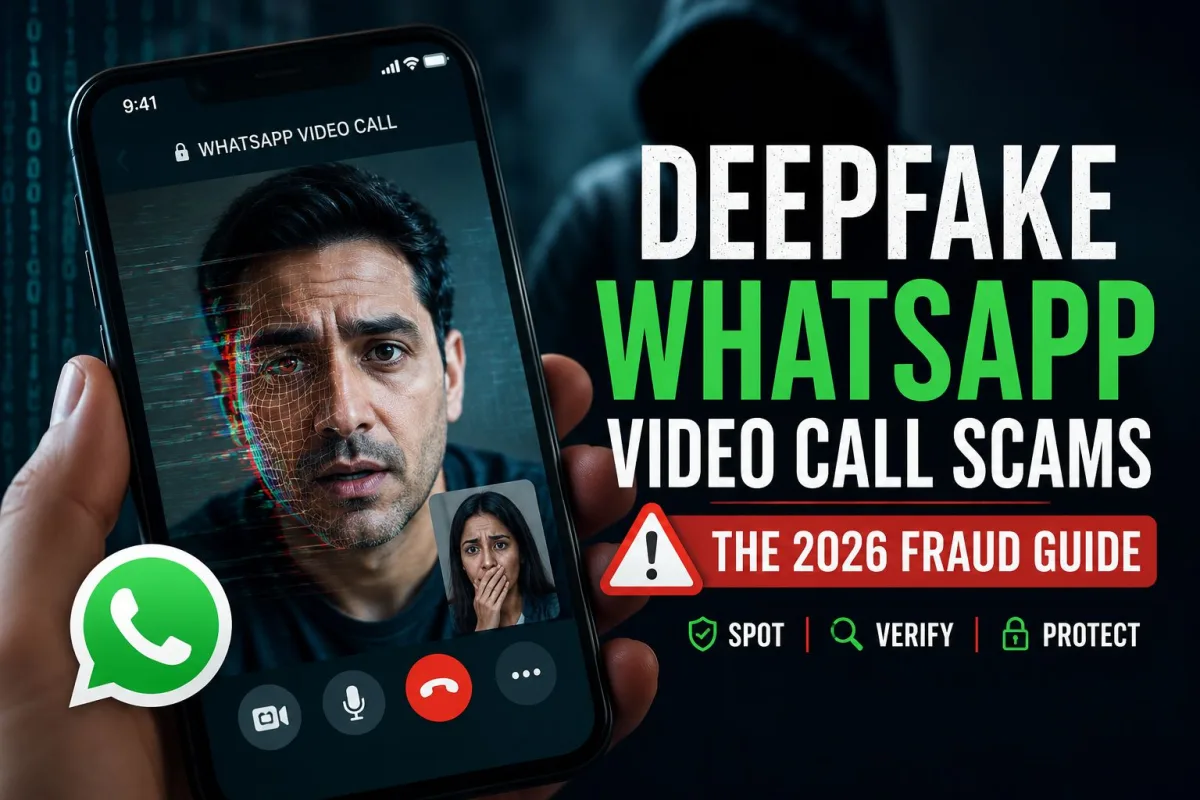
A deepfake video call uses artificial intelligence software to map a digital mask over a fraudster's face in real time. Think of it like a highly advanced Snapchat or Instagram filter. The scammer speaks into their microphone, and the AI alters their voice to match the person they are impersonating. As the scammer moves their head, the digital face moves with them on your screen.
Fraudsters gather the raw material for these clones from public social media accounts. Every time you post a clear video of yourself speaking on LinkedIn, Instagram, or YouTube, you provide data. Criminals download this footage. They feed it into machine learning programs that learn the geometry of your face and the specific pitch of your voice. Within hours, they have a working digital puppet.
How a deepfake video call scam works
These operations run like corporate projects. They follow a specific, practiced script designed to create maximum panic. We can break down the typical attack into distinct phases.
The surveillance phase
Criminals first identify a target with disposable income. They monitor the target's social network. They figure out who the target cares about or reports to. If you are a finance manager, they will profile your CEO. If you are an older parent, they will profile your children studying abroad or working in another city. They track travel schedules through social media posts to know exactly when the real person is unavailable or on a flight.
The initial contact
You receive an incoming video call on WhatsApp from an unknown number. The profile picture belongs to the person you know. When you answer, you see their face. The environment behind them is usually blurred or dark. The call quality is deliberately poor. Fraudsters degrade the video resolution to hide the digital imperfections of the AI mask.
The emergency script
The cloned voice immediately reports a crisis. News reports from earlier this year highlighted a terrifying case in Indore. A couple received a video call showing their son soaked in blood. The digital clone claimed he was in a severe accident and needed immediate hospital admission fees. The panic was absolute. The parents lost Rs 1 lakh through an instant UPI transfer before they realized the truth.
In corporate environments, the script changes. The 'CEO' calls the accounts department from an airport lounge. They claim a major vendor needs an immediate IMPS transfer to release critical supplies. They insist they cannot talk long because their flight is boarding. The goal is always to bypass normal verification procedures through sheer urgency.
Clear warning signs you are talking to a deepfake
State Bank of India recently issued an urgent alert to crores of customers about these highly sophisticated impersonation tactics. While the technology is good, it is rarely perfect. You can spot the fraud if you know what to look for.
- Watch the eyes carefully. AI models struggle to replicate natural human blinking. The digital clone might stare continuously or blink in a disjointed, robotic manner.
- Look at the lighting. The shadows on the person's face will often contradict the lighting in the room behind them.
- Pay attention to sudden movements. If the caller turns their head quickly or covers part of their face with their hand, the AI mask will glitch. You might briefly see the scammer's real face underneath.
- Listen to the audio quality. Deepfake voices often sound metallic or flat. They lack the natural emotional inflection of a real human in distress.
- Notice the persistent excuses. The caller will always claim their main phone is broken, stolen, or out of battery, which is why they are calling from a new number.
How to protect yourself and your family
Technology alone will not stop these attacks. You need clear personal policies. The most effective defense is a change in your daily communication habits.
Create a family safe word
This is genuinely useful and costs nothing. Sit down with your family and agree on a specific word or phrase. If anyone ever calls asking for emergency funds from a new number, ask for the safe word. A scammer running a voice clone will not know it. Many Indian families have started using obscure regional phrases or old inside jokes for this exact purpose.
Verify through secondary channels
If your boss or relative calls demanding money, apply a hard rule. Disconnect and verify. Hang up the WhatsApp call. Dial their regular, saved mobile number through your standard cellular network. If they do not answer, call their spouse, their office desk, or their roommate. Do not send a single rupee until you speak to the actual person on a known number.
Limit your biometric exposure
You must reduce the raw data available to scammers. Make your personal social media accounts private. Stop posting high-resolution videos of your children online. If you are a professional who must speak publicly, understand the risks. You can find more strategies in our digital safety guides.
Where to report deepfake fraud in India
If you realize you transferred money to a scammer, your reaction time determines whether you will ever see those funds again. Panic is your enemy. Action is your only tool.
Do not waste time confronting the scammer. Do not waste the first hour crying or feeling ashamed. Call the national cyber helpline at 1930 immediately.
This number connects you to the Citizen Financial Cyber Fraud Reporting and Management System. If you call quickly enough, authorities can instruct the receiving bank to freeze the fraudulent account. The golden window for freezing a UPI or IMPS transfer is incredibly short.
After you make that call, you must file a formal, written complaint at cybercrime.gov.in. This creates the official legal record required by your bank to process any potential refund. CERT-In, the national nodal agency for responding to computer security incidents, specifically advises victims to preserve all digital evidence. Take screenshots of the WhatsApp call log. Save the specific phone number. Note down the exact UPI ID or bank account number where you sent the money.
The Indian legal system is currently adapting to this reality. The 2026 IT rules place stricter requirements on platforms to remove deepfake content, but the initial defense rests entirely on your awareness. We track these evolving threats regularly in our latest scam alerts section. Stay suspicious of urgent video calls, verify every financial request, and educate your older family members about what AI can do today.