Look, we all want to own a house. The Pradhan Mantri Awas Yojana (PMAY) is genuinely a helpful government initiative. Over the last few years, it has given housing subsidies to millions of Indians trying to build or buy their first home. The Credit Linked Subsidy Scheme (CLSS) under PMAY can literally save a family lakhs of rupees in interest payments. But scammers know this. Recently, there has been a massive spike in the fake Pradhan Mantri Awas Yojana (PMAY) 2026 Subsidy Approval SMS scam targeting everyday smartphone users across India. This scam is designed to do one thing. It wants to empty your bank account while you think you are getting government money.
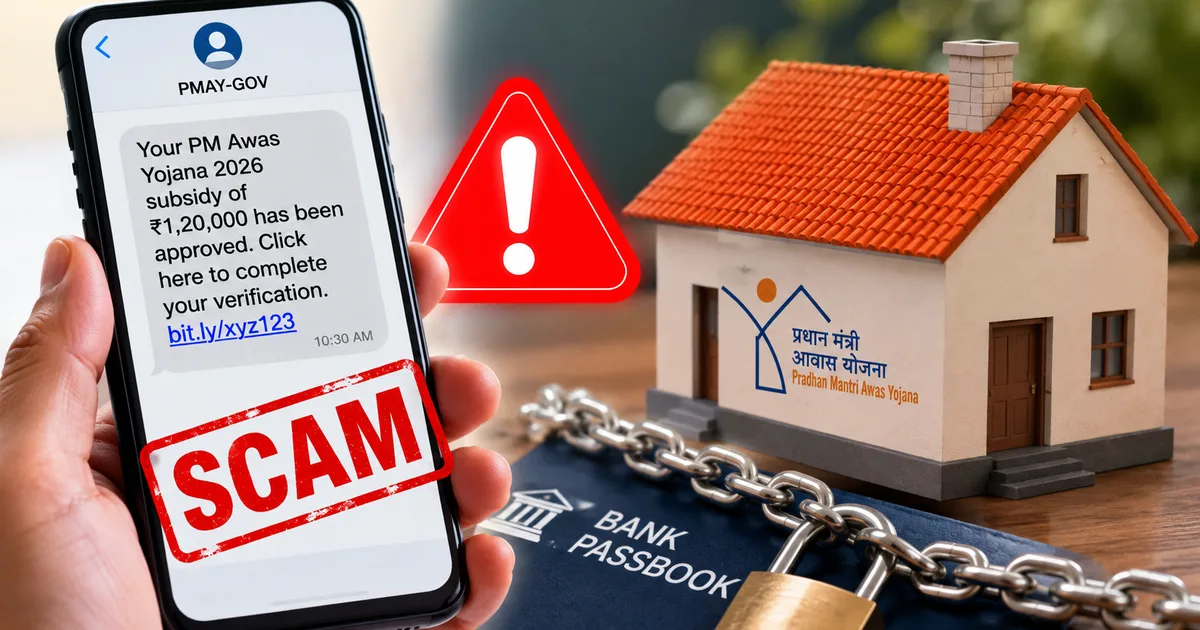
I've been tracking these financial frauds for a while. Honestly, the scammers are getting smarter every single day. They don't just ask for your OTP anymore. They send you a text message that looks exactly like it came from a government department. It tells you your PMAY subsidy of Rs 2.67 lakh is approved for 2026. Then it asks you to click a link to claim it or update your Aadhaar details. In my experience, they always try to rush you into making a mistake.
If you click that link, you're in serious trouble.
I want to break down exactly what happens next so you don't fall for it.
What exactly is the PMAY SMS scam?
The premise is very simple. Scammers buy massive databases of active Indian phone numbers. And they blast out thousands of SMS messages every day. The message usually says something about your housing loan subsidy getting approved under the PM Awas Yojana. They mention a specific, believable amount. Often they say you need to finish a quick KYC update or pay a small processing fee of Rs 10 or Rs 50 to get the lakhs deposited directly into your bank account.
They use the official scheme name because it builds instant trust. You see PMAY, you think it's real. And if you've actually applied for a home loan or the housing subsidy recently, the timing seems absolutely perfect. But it's a trap. Just like the Fake PM Fasal Bima Yojana 2026 claim approval SMS scam: protect your bank account we saw earlier this year, criminals are turning government schemes into weapons to steal your money.
The State Bank of India (SBI) recently had to issue a stern warning about a very similar tactic. Scammers were sending fake messages claiming a user's YONO app would get blocked if they didn't update their Aadhaar details through a link. The bank pleaded with customers to ignore these messages. The PMAY scammers use the exact same psychological pressure (annoying, I know). They want you to panic about missing out on the subsidy or failing a compliance check.
How the fraud actually works step by step
This is the exact process these criminals use. Understanding the mechanics is the only way to spot the trap before it snaps shut.
First, you get the SMS. It usually has a sense of urgency. It might say your subsidy will get canceled or given to someone else if you don't act within 24 hours. There is a link at the bottom of the message.
Second, you click the link. It takes you to a website that looks exactly like the official PMAY portal. The scammers steal the government logos and the Prime Minister's photo. They make it look perfect on a mobile screen. But look at the URL in your browser. It will be something weird like pmay-subsidy-update-2026.xyz or pmay-gov-kyc.in instead of an official .gov.in address.
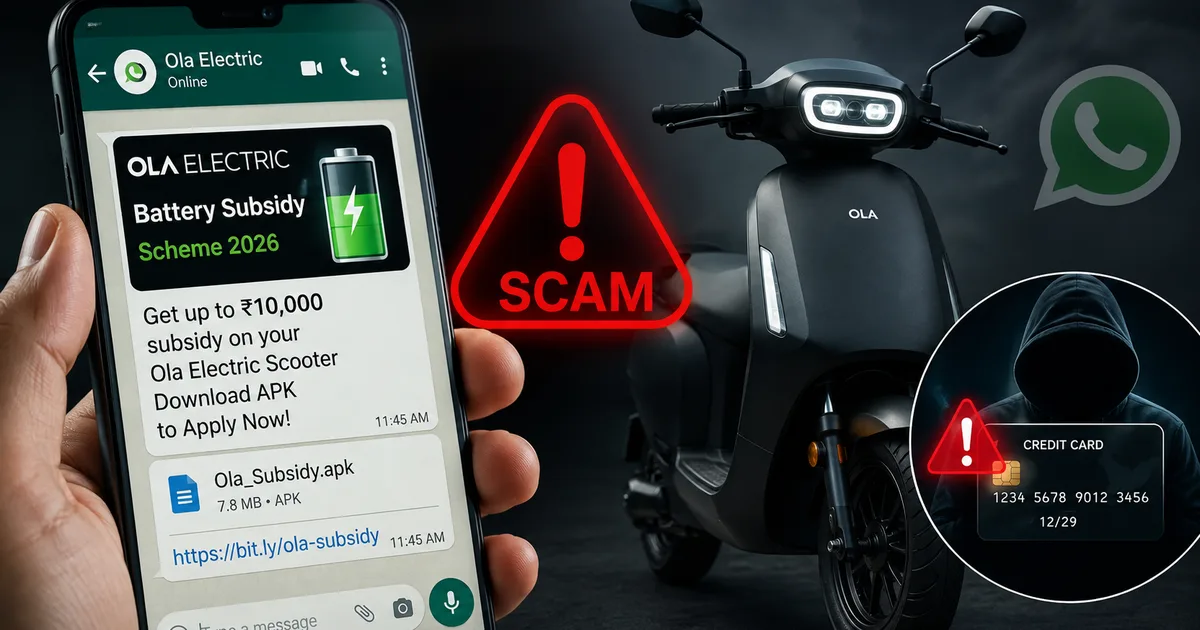
Third, the fake site asks you to download an application to process your claim. Or it asks you to fill out a form with your Aadhaar number and PAN card details. Sometimes they tell you to install an APK file directly because they claim the app is updating on the Play Store.
If you download that app, it installs malware on your phone. We recently saw how dangerous this can be with the CallPhantom apps uncovered by ESET researchers. Those apps promised to show call histories but ended up stealing money from millions of users in India. The fake PMAY apps are even worse. They contain malware that can silently read your incoming SMS messages. That means the scammers can see your bank OTPs without you ever knowing.
Finally, the scammers initiate a transfer from your bank account. The OTP comes to your phone. The hidden app intercepts that OTP and sends the code to the scammer. They empty your account while your phone sits quietly in your pocket. Sometimes they use similar tactics seen in the PM Kisan 2026 KYC SMS Scam: Protect Your Bank Account, tricking you into approving a UPI mandate that drains your account every month.
Real corruption makes the fake messages believable
One big reason these SMS scams work so well is that PMAY is constantly in the Latest Tech News and mainstream media. People know the scheme involves large amounts of money and they know the system has flaws.
Just recently, we saw massive real-world corruption involving PMAY funds. In Beed's Kej nagar panchayat, an FIR was filed against six officials over a Rs 4.2 crore PMAY scam. In Parbhani district, a Rs 5.6 crore scam surfaced and led to FIRs against former council chiefs. In Karnataka, the Lokayukta raided officials accused of a massive Rs 23.35 crore fraud. There was even a shocking Rs 29 crore scam exposed where hundreds of houses existed only on paper.
When everyday people read about crores of rupees moving around in PMAY funds and corrupt officials siphoning it off, getting an SMS about a Rs 2.67 lakh subsidy doesn't seem impossible. It feels like the chaotic reality of Indian bureaucracy. The numbers here are a bit fuzzy, but scammers definitely read the news to make their fake messages seem completely plausible.
Why Indian smartphone users are highly targeted right now
India has seen a massive boom in digital payments.
UPI is incredible, and it has made life so much easier. But it has also made stealing money incredibly fast. Scammers know that almost every smartphone in India is connected to a bank account through UPI.
Also, digital literacy hasn't caught up with digital adoption. Many people who are using smartphones for the first time don't know the difference between a real website and a fake one. They trust written text. If an SMS says Government of India, they believe it. Criminals exploit this trust aggressively.
They also exploit the sheer volume of government schemes. Between PMAY and PM Kisan, there is always some subsidy being discussed in the news. It's impossible for a regular person to keep track of exactly how every single scheme communicates with beneficiaries. The scammers rely on that confusion. They send out millions of messages knowing that a few hundred people will fall for it today. And a few hundred people losing their savings is a huge payday for a cybercriminal.
Warning signs you shouldn't ignore
Basically, you need to know how to spot these fake messages. Government departments operate in very specific ways. They don't act like desperate telemarketers trying to close a sale.
Watch for these red flags:
- The sender ID is a normal 10-digit mobile number instead of an official header like VD-GOVTIN or AD-PMAYIN.
- The message contains grammar mistakes, strange capitalization, or spelling errors.
- There is a link that doesn't end in .gov.in or .nic.in. If it ends in .com, .xyz, .in, or .net, it's fake.
- You are asked to pay a small processing fee via UPI to release a large sum of money.
- The website asks you to download an APK file directly instead of directing you to the Google Play Store or Apple App Store.
- You are pressured to act immediately to avoid losing the money.
The processing fee trick is the most common red flag. The government will never ask you to send Rs 10 via Google Pay or PhonePe to verify your bank account for a subsidy. That's always a scam.
How to protect yourself and your bank account
Your smartphone is essentially your bank vault now. You have to treat it with that level of security.
So, never click on links in unsolicited text messages. I can't stress this enough. If you think you might actually be eligible for a PMAY subsidy, open your browser and type in the official website address yourself. Go to pmaymis.gov.in. Don't use the link they texted you.
Second, disable the setting on your Android phone that allows installing apps from unknown sources. Go to your settings, search for unknown sources, and make sure it's turned off for your browser and file manager (which is a lifesaver, honestly). This prevents those dangerous APK files from installing even if you accidentally download one.
Third, be extremely careful with your UPI PIN. You only enter your UPI PIN when you are sending money to someone. You never need to enter your PIN to receive money. If an app or website says to enter your PIN to receive the subsidy, they're stealing from you.
Don't download any KYC apps from text message links. Official government apps like DigiLocker or the PMAY app are only available on official app stores.
"Citizens must remain vigilant against fraudulent applications and SMS phishing attempts that masquerade as official government services. Always verify the source and never share OTPs or install unverified APK files." - CERT-In Advisory
What happens if your identity is stolen?
Sometimes, the scammers don't just want your money today. They want your identity for tomorrow. When you fill out those fake PMAY forms, you are giving them your Aadhaar number and your PAN card. They can use this information to open fake bank accounts or even take out instant personal loans.
That's why reporting the scam to cybercrime.gov.in is so important. You need an official record showing that your documents were compromised. If a loan is taken out in your name three months from now, that police complaint will be your only defense against the collection agents.
Where to report the scam immediately
If you clicked the link and gave away your details, you need to act fast. Time is literally money in these situations.
Call the national cybercrime helpline at 1930 immediately. This is the most effective first step you can take. The 1930 helpline is connected directly to major banks and wallets. I'm not sure exactly why some people wait to do this, but if you call them quickly enough, they can sometimes freeze the fraudulent transaction before the scammer withdraws the cash from an ATM or moves it to an untraceable crypto wallet.
After calling the helpline, file a detailed complaint on the official cybercrime portal at cybercrime.gov.in. Keep screenshots of the SMS and the fake website. Give all this evidence to the police. Don't delete the SMS until you've taken a screenshot.
Next, call your bank's customer care and block your account and your debit cards. Tell them your phone might be compromised. If you installed a fake app, factory reset your phone right away. Don't just delete the bad app. Malware can hide deep in your system. A complete factory reset is the only way to be sure the tracking software is actually gone.
For more information on staying safe online, check our Scam Alerts & Safety section regularly. We update it with the latest frauds hitting Indian users.
Thing is, scammers are constantly adapting. They read the news. They know what schemes the government is pushing. And they use that information to build better traps. If a text seems sketchy, stay away. Take a breath before clicking anything. Your bank account will thank you.