If you live in Andhra Pradesh, you probably know someone who depends on a monthly government pension. Maybe it's your grandmother or a widowed neighbor. These monthly payments are a lifeline for millions. And the state government recently made some big changes to how this system works. Honestly, keeping track of government schemes can give anyone a headache.
Here's exactly what the NTR Bharosa Pension Scheme 2026 actually is, who qualifies for it, and how the recent changes affect the money landing in people's bank accounts.
What is the NTR Bharosa pension scheme?
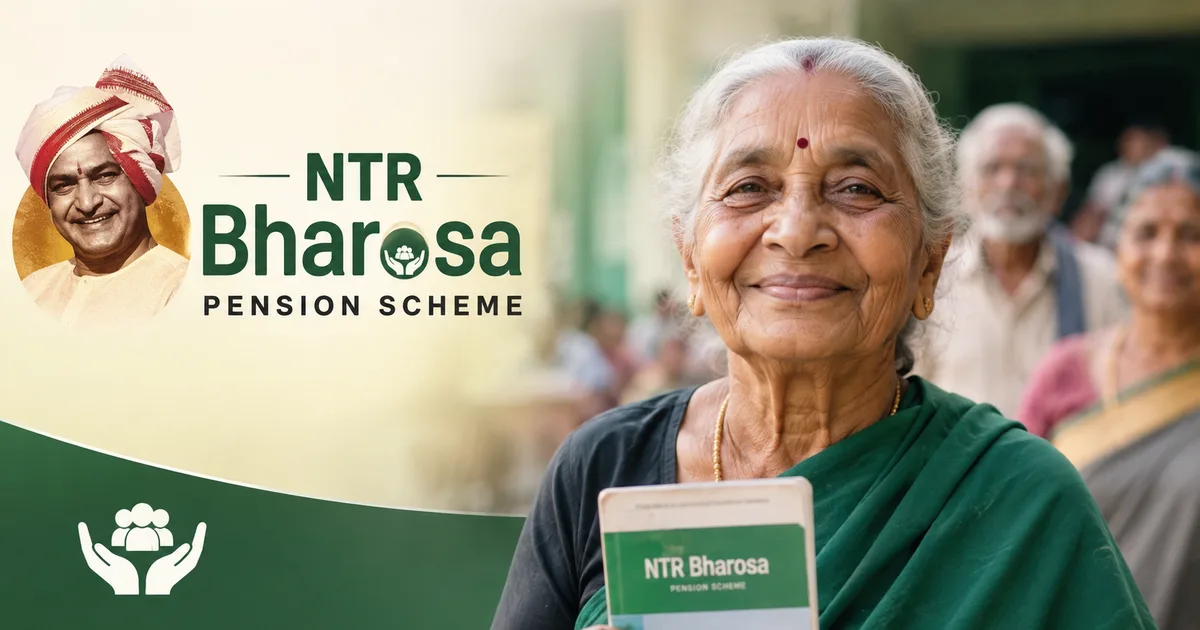
The NTR Bharosa Pension Scheme is a social security program from the Andhra Pradesh government. It gives monthly financial help to people in the Below Poverty Line (BPL) category. Basically, it's a safety net for those who can't earn a regular income because of age or disability.
If the name sounds new, that's because it is. The scheme was previously known as the YSR Pension Kanuka under the old administration. But when the current TDP-led government came into power, they renamed the scheme. They also increased the payout amounts across several categories. I think they allocated a massive ₹4,400 crore just to handle these increased distributions for the first phase.
This is a huge initiative. As of July 2026, the state released ₹2,711.79 crore to give pensions to over 62.19 lakh beneficiaries in a single month. It's a staggering amount of money. It shows just how many families rely on this support for basic survival.
To put that in perspective, we're talking about roughly 10% of the entire state's population getting direct financial aid every single month. Managing a database of that size requires a massive digital infrastructure. So, the system is tied very closely to Aadhaar and the state's own centralized welfare portals (which makes sense, actually).
Understanding the 2026 pension amounts
People mostly just want to know how much money they'll get. The government restructured the payouts. Now, the amounts vary a lot depending on your specific category. They moved away from a flat rate to a more tiered system based on need. I'm not sure exactly why they waited this long, but it's a good change.
Here's what you need to know about the current monthly pension amounts:
- Senior citizens receive ₹4,000 per month.
- Widows receive ₹4,000 per month.
- Single women receive ₹4,000 per month.
- Fishermen, weavers, toddy tappers, and traditional artisans receive ₹4,000 per month.
- People affected by tuberculosis (TB) now receive ₹6,000 per month, up from the previous ₹3,000.
- Differently-abled individuals receive ₹6,000 per month.
- People suffering from chronic illnesses receive ₹10,000 per month, doubled from ₹5,000.
- Individuals with complete disabilities receive the highest tier of ₹15,000 per month, a massive jump from the older ₹5,000 rate.
I think the increase for people with complete disabilities is an excellent policy decision. Managing a severe disability in India is incredibly expensive. Between medications and specialized transport, ₹5,000 was barely scratching the surface. Bumping that up to ₹15,000 actually makes a dent in those medical bills. It gives families some breathing room.
Eligibility criteria for the NTR Bharosa pension
You can't just apply because you want extra cash. The government is quite strict about who qualifies. They verify documents thoroughly to prevent fraud.
First and foremost, you must be a permanent resident of Andhra Pradesh. If you recently moved from Telangana or Odisha, you won't qualify. You also need to belong to the Below Poverty Line (BPL) category. The state uses specific rules to define BPL. These rules are usually tied to land ownership and electricity consumption.
To prove your eligibility, you need specific documents. A white ration card is basically mandatory as proof of income and family structure. You also need an Aadhaar card for identification. Depending on your category, you might need extra paperwork. Widows need a death certificate of their spouse. Differently-abled applicants need a medical certificate from a government hospital. This certificate must state the precise percentage of their disability. And those applying under the chronic illness category need certified medical records from a district medical board. Honestly, gathering these documents can be a bit of a mess.
If you're interested in how other states handle similar welfare programs, you might want to read our guide on the Rythu Bharosa Scheme for farmers or our breakdown of the Subhadra Yojana to see how financial assistance is structured elsewhere.
Recent updates and new approvals
The government is actively adding new people to the lists. In June 2026, State Agriculture Minister Kinjarapu Atchannaidu announced that new widow pensions would be approved starting June 12.
So, following through on that promise, the government recently approved 7,792 new widow beneficiaries. They released ₹3.12 crore just for them. These new beneficiaries started getting their money from July 1.
"The NDA government has been committed to ensuring welfare support for poor and vulnerable sections by releasing NTR Bharosa pension funds on the first day of every month."
That quote is from Kondapalli Srinivas. He's the Minister for MSME and SERP. The government has a pretty consistent track record of distributing these funds on the first of the month. In my experience, timely payments are everything for these families. Since they took office, they've spent over ₹68,598 crore on pension payments alone.
How the application process works
Applying for government schemes in India usually involves a lot of running around. But the pension process is pretty streamlined now. This is thanks to the village and ward secretariat system. If you ask me, this local setup is a huge improvement.
You don't need to navigate a complex website yourself or pay a broker at an internet cafe. The easiest way to apply is to visit your local Grama Sachivalayam (Village Secretariat). Or visit a Ward Sachivalayam if you live in a city. You can get the physical application form right there from the front desk.
Fill out the form with your basic details. Include your name and Aadhaar number (the numbers here are a bit fuzzy, but millions use this exact process). Attach photocopies of your supporting documents. Make sure you have your Aadhaar and ration card ready. You'll also need any specific certificates your category requires. It's always smart to carry the original documents with you. The officer might want to verify them on the spot.
Submit everything to the Panchayat Secretary. Or hand it to the Ward Welfare Development Secretary. They'll review your documents and upload your details into the government's Navasakam portal. After this, a field verification usually happens. A government volunteer will visit your house. They check to confirm you actually live there and meet the BPL rules. They look at things like whether you live in a pucca house or if you own a car.
Once approved by the Mandal Parishad Development Officer (MPDO) or the municipal commissioner, your name goes on the beneficiary list. You'll start getting the money on the first day of the following month.
The distribution mechanism
One interesting thing about the Andhra Pradesh pension system is how the money actually reaches people. National schemes often rely on Direct Benefit Transfer (DBT) straight into bank accounts. AP uses a hybrid model instead. It relies heavily on human volunteers. In my experience, relying solely on banks in rural areas just doesn't work well.
On the first of every month, village and ward volunteers physically visit the homes of beneficiaries. They hand over the cash. They carry a biometric device, usually a smartphone with a fingerprint scanner. The beneficiary places their thumb on the scanner. The Aadhaar authentication goes through. Then the volunteer hands them the cash.
There's a good reason for this setup. Many senior citizens and disabled folks find it incredibly difficult to travel to a bank branch or an ATM. By bringing the cash to their doorstep, the government removes a massive hurdle. It also stops situations where middlemen take control of the beneficiary's ATM card and steal the funds (annoying, I know).
But the government recently allowed pension transfers for some beneficiaries who requested it. This means the money can go straight to their bank accounts if they prefer. This is a solid move. It helps people who are bedridden or live with trustworthy family members and don't want to deal with cash.
Digital tracking and common issues
We're in 2026. So obviously there's a massive digital component running in the background. The government uses a centralized database to track beneficiaries and prevent fraud. Your Aadhaar must be linked to your demographic data. And your biometric data must be up to date.
Sometimes things go wrong. If your pension suddenly stops, it's almost always a documentation or technical issue. The most common culprit is a failed e-KYC (Know Your Customer) update. Maybe you haven't updated your Aadhaar biometrics recently. Or maybe there's a mismatch between your ration card data and your Aadhaar details. If so, the system will automatically flag your account and pause your payments.
If this happens, don't panic. You just need to go back to your local secretariat. Ask them to check your status on the portal. Usually, doing a fresh biometric authentication fixes the problem within a few days. You can also track updates via our tech explainers section where we cover how to navigate these government portals.
The government periodically removes ineligible beneficiaries. If a family member gets a government job or starts paying income tax, their BPL status might be revoked. The backend system cross-references transport department databases and tax records. When it finds a match, it automatically cancels the pension. It's a harsh system. But it's how they keep the state budget manageable and ensure the money goes to those who genuinely need it. If you ask me, they could definitely make the appeal process smoother, though.
Why these digital schemes matter
You might wonder why a tech site is covering a state pension scheme in such detail. The reality is that the delivery of these welfare programs relies entirely on India's digital public infrastructure. The government can distribute ₹2,700 crore to 62 lakh people on a single day without massive corruption. This is only possible because of Aadhaar authentication and localized digital portals.
Understanding how the NTR Bharosa scheme operates gives you a clear picture of how technology intersects with daily life for average Indians. Technology is about more than the newest smartphones you read about in tech news. It's about digital systems that literally put food on the table for millions of families.
If you have relatives or neighbors who might qualify but haven't applied, help them get their documents in order. The application process isn't terribly difficult. But the financial relief it provides is substantial. Dealing with government paperwork is frustrating. But for a scheme that pays out up to ₹15,000 a month for severe medical cases, spending an afternoon at the ward secretariat is absolutely worth the effort.