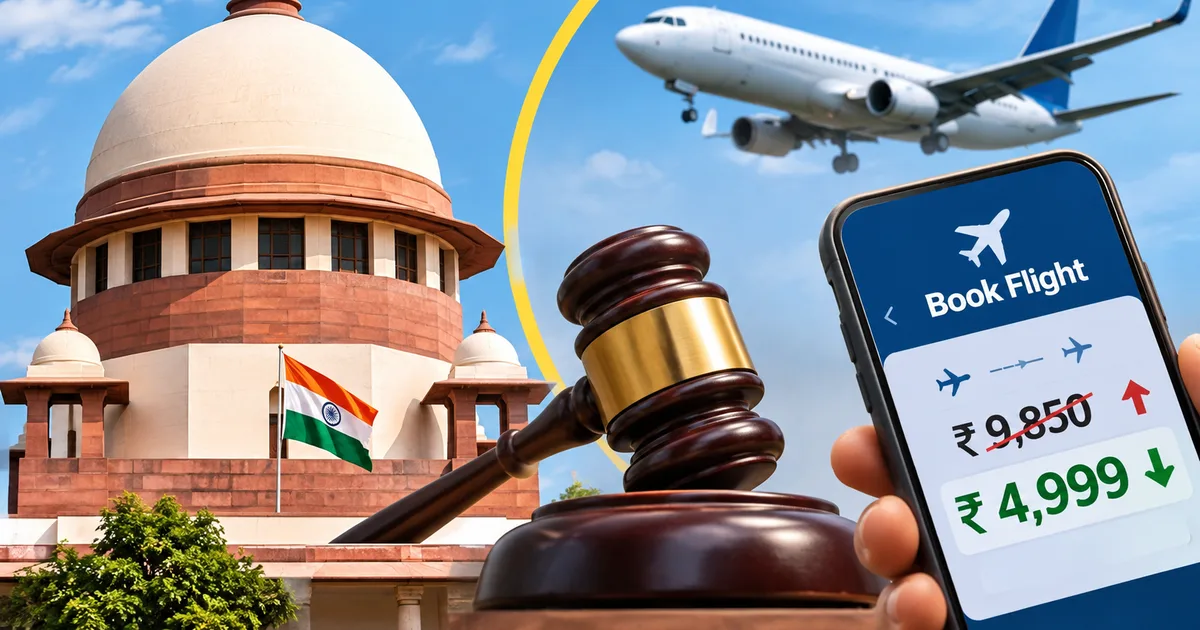
If you opened MakeMyTrip or EaseMyTrip to book a flight home for Diwali or Chhath Puja, you probably stared at your phone screen in total disbelief. Tickets that normally cost ₹4,500 were suddenly sitting at ₹28,000, leaving thousands of regular travelers stranded or scrambling for impossible tatkal train tickets. That sudden sticker shock brought travelers straight to the judges, resulting in what many are calling the Supreme Court airfare surge pricing ruling 2026.
A four-word remark from the bench caught everyone off guard.
When an advocate pleaded for an immediate cap on domestic airfares before the festive week, the court didn't offer sympathy. Instead, the bench told the counsel plainly: don't travel. That sharp comment triggered outrage across social media and flight booking forums. Honestly, if you ask me, passengers had every reason to feel furious (and good luck finding an open train berth on two days' notice). But it's no secret that behind that blunt exchange lies a messy legal fight over algorithms and government authority that has been brewing in India's highest court for months.
"Don't travel by air. Next case." - Justice Vikram Nath, responding to the urgent plea in the Supreme Court.
What happened inside the courtroom during festive airfare hikes hearing
Here's how the drama unfolded on Monday, November 2, 2026. Advocate Abhinav appeared before a three-judge bench where Justice Vikram Nath presided alongside Justice Sandeep Mehta and Justice Aparesh Kumar Singh. He brought up an urgent application about domestic airfares surging up to 700% ahead of Diwali.
The numbers were brutal. Routes like Delhi to Kolkata and Delhi to Patna usually cost around ₹4,000 to ₹6,000, but booking portals were suddenly quoting ₹25,000 all the way up to ₹32,000 for a single seat. That's wild. The counsel argued that air travel is an essential service for modern citizens today, meaning these extreme spikes violate Article 14 of the Constitution, which guarantees equality before the law.
Justice Nath cut the argument short with four words: "Don't travel by air. Next case."
When the advocate tried pushing back, insisting that ordinary passengers have urgent family duties and constitutional rights, Justice Nath repeated: "Alright, don't travel." Just like that, the bench refused to hear the urgent plea that morning.
Look, I get why people were furious. I think anyone would feel insulted. If you're a student trying to get back to Patna for Chhath Puja, or a private sector employee with three days of approved leave, hearing a top judge tell you to just stay home feels pretty dismissive. (Annoying, I know, especially when holiday dates are locked in.) But once you step back from the viral headlines, the bench wasn't saying airlines should charge whatever they want forever. The court was dealing with an eleventh-hour petition attempting to bypass an already scheduled hearing.
There was a specific reason the judges refused an emergency stay. The court had already set aside November 16, 2026, for a comprehensive hearing on airline tariffs. Stepping in with a hasty judicial cap forty-eight hours before Diwali without hearing airlines or reviewing economic data would've created operational chaos at airports across the country. That's why courts often handle commercial pricing disputes with caution, as seen in recent consumer commission disputes over pricing and service delivery.
How airline dynamic pricing algorithms work behind your booking screen
To understand why airfares explode during festival seasons, look at the automated code running airline booking engines. Airlines in India don't have managers sitting in an office manually changing ticket prices every hour. Computers do it automatically using dynamic pricing software.
The whole mechanism relies on what the aviation industry calls fare buckets.
Take an Airbus A320 with 180 seats flying between Delhi and Kolkata. The airline doesn't assign one flat price to every seat. Instead, it divides those 180 seats into a dozen different price categories. The first twenty seats might belong to bucket A at ₹4,200. Then thirty seats sit in bucket B at ₹6,500. Bucket C jumps to ₹11,000, and the final tier reaches ₹28,000 or more. In my experience, watching ticket prices jump while you refresh the screen is deeply frustrating (which makes sense, actually, given how aggressively booking bots update seat inventory). The software monitors seat sales every second.
Several automated triggers push ticket prices higher:
- Booking software assigns seats to escalating price tiers long before takeoff.
- Algorithms calculate passenger demand velocity by counting real-time user searches on airline websites.
- When cheap tiers sell out, the system automatically locks out discounts and serves higher brackets.
- Any flight cancellation or schedule reduction dries up total seat supply, pushing late shoppers into top tiers instantly.
Thing is, this automated setup creates a vicious spiral during Indian holidays. Millions of people want to fly on the exact same two days. As soon as the lower buckets vanish, the algorithm doesn't care whether you're traveling for a festival or rushing for an urgent medical visit. It simply charges the highest programmed rate because seats are scarce. We see similar automated models in other tech sectors, such as pricing models in modern platforms where automated charges spike whenever server capacity gets stretched.
To make matters worse, airlines spent the last decade quietly unbundling basic services. Free checked baggage dropped from 25 kg to 15 kg. Then carriers began charging extra fees for window seats, aisle seats, extra legroom, and priority boarding. By the time you pay convenience charges on UPI or net banking, a one-way domestic ticket costs as much as an international flight.
The pending PIL and Bharatiya Vayuyan Niyam 2026
S. Laxminarayanan filed this Diwali plea as an urgent application inside his ongoing Public Interest Litigation under Article 32 of the Constitution. Laxminarayanan approached the Supreme Court to demand a transparent, binding regulatory framework to rein in erratic airline fares and abusive ancillary charges.
And it's not like the Supreme Court ignored this issue in earlier hearings. Back in May 2026, the exact same bench expressed grave concern over steep holiday airfare hikes, stating clearly that there has to be rationalisation in airline ticket pricing. The bench noted that sudden swings during festivals were a matter of serious concern that justified judicial review under writ jurisdiction.
During hearings in August and October 2026, the bench pressed the Union Ministry of Civil Aviation to stop dragging its feet and finalise binding regulations. I'm not sure exactly why the ministry took so long to act, but on October 16, Solicitor General Tushar Mehta informed the court that the central government had granted administrative approval to new statutory rules. He promised they would appear in the official gazette within two weeks (the exact bureaucratic timeline here was a bit fuzzy, but that was the gist).
Why the court refused an interim order
The central government kept its word on the publishing schedule for once. On November 1, 2026, the Ministry of Civil Aviation notified the Bharatiya Vayuyan Niyam, 2026, framed under the parent Bharatiya Vayuyan Adhiniyam, 2024. That happened just twenty-four hours before advocate Abhinav stood up to request an emergency price ceiling.
Here's the deal: with brand-new statutory rules officially published on Sunday, the judges weren't going to invent an impromptu price cap on Monday morning. The court had already instructed the government to place the notified rules on record for the scheduled November 16 hearing. An ad-hoc interim order would've cut across the government's official framework right as it arrived. You can explore how regulatory developments shape consumer law through our in-depth regulatory explainers.
The rules arriving on January 1
The notified regulations change how the Directorate General of Civil Aviation oversees private carriers. The new statutory rules take effect from January 1, 2027, replacing older aviation provisions.
Rule 192 of the new framework contains two major provisions for ordinary flyers:
- Scheduled airlines must establish ticket tariffs based on operational costs, reasonable profit, and prevailing market characteristics.
- Airlines must submit full tariff structures and route pricing data directly to the DGCA.
- The central government retains statutory authority to issue binding directions on airfares whenever public interest demands intervention during extraordinary circumstances.
That third provision matters. Under existing rules, the DGCA maintained an arm's-length approach, arguing that airfares are deregulated and determined by market forces. But now, the new framework gives the government direct statutory power to step in when fares spin out of control. I think that shift is long overdue. Laxminarayanan's petition also seeks to restore the 25 kg free baggage allowance, which the court will examine on November 16.
Why capping domestic flight tickets is harder than capping train fares
It's a fair question whenever airfares hit ₹25,000: why can't the government simply cap domestic tickets at ₹8,000? Indian Railways fixes fares across all trains, so why not do the same for airlines?
Basically, aviation economics is brutal compared to railways. Airlines in India don't own most of their airplanes; they lease them from international lessors, paying monthly lease rents in US dollars. When the Indian rupee fluctuates against the dollar, airline operational expenses rise overnight. On top of that, Aviation Turbine Fuel accounts for roughly 40% of an Indian carrier's operating cost, and fuel taxes vary heavily across states (which is a massive headache, honestly).
If the government enforces an arbitrary fare ceiling that sits below an airline's marginal operating cost on high-demand dates, carriers face perverse incentives. They might cancel scheduled flights on secondary routes or shift planes to charter operations. (Which, if you ask me, would make the holiday travel crunch ten times worse.) Instead of paying expensive fares, passengers would find zero available flights at all.
At the same time, complete deregulation fails when airline competition is thin. On routes like Delhi to Varanasi or Mumbai to Patna, two carriers often control the entire schedule. When supply is that tight, algorithms push prices to monopoly levels. Finding a fair balance between commercial viability and passenger protection is what the Supreme Court must tackle on November 16.
What you can do right now as an Indian flyer
While the legal process moves through formal hearings and gazette notifications, passengers need practical strategies to avoid getting gouged during upcoming holidays. We share booking tactics inside our practical passenger guides, but a few core habits make an immediate difference. In my experience, these simple adjustments save thousands of rupees right away (and I'm not sure exactly why more travelers don't use them).
Here are practical steps to manage high travel costs:
- Set automated fare alerts on travel aggregators instead of repeatedly searching routes, which can signal high purchase intent to booking portals.
- Check alternative airports within short driving distance, like flying into Gaya or Darbhanga instead of Patna during peak festive dates.
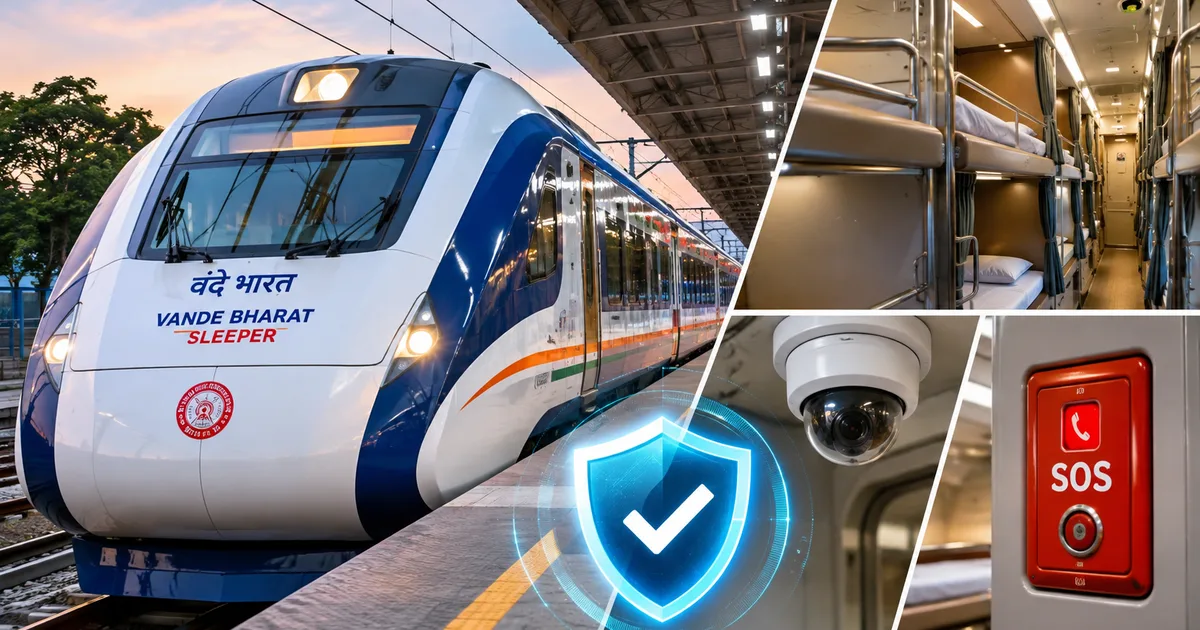
- Compare premium train options such as Vande Bharat and Tejas services, which often cost a fraction of holiday airfare and offer fixed pricing.
- Report unfair ticket cancellations or unauthorized convenience fees directly on the Ministry's AirSewa portal for formal tracking.
It's true that Justice Vikram Nath delivered a blunt courtroom remark, but the real showdown arrives on November 16. That's when the Supreme Court reviews the newly notified Bharatiya Vayuyan Niyam, 2026 and decides whether the government must actively use its price intervention powers before the next festival rush.