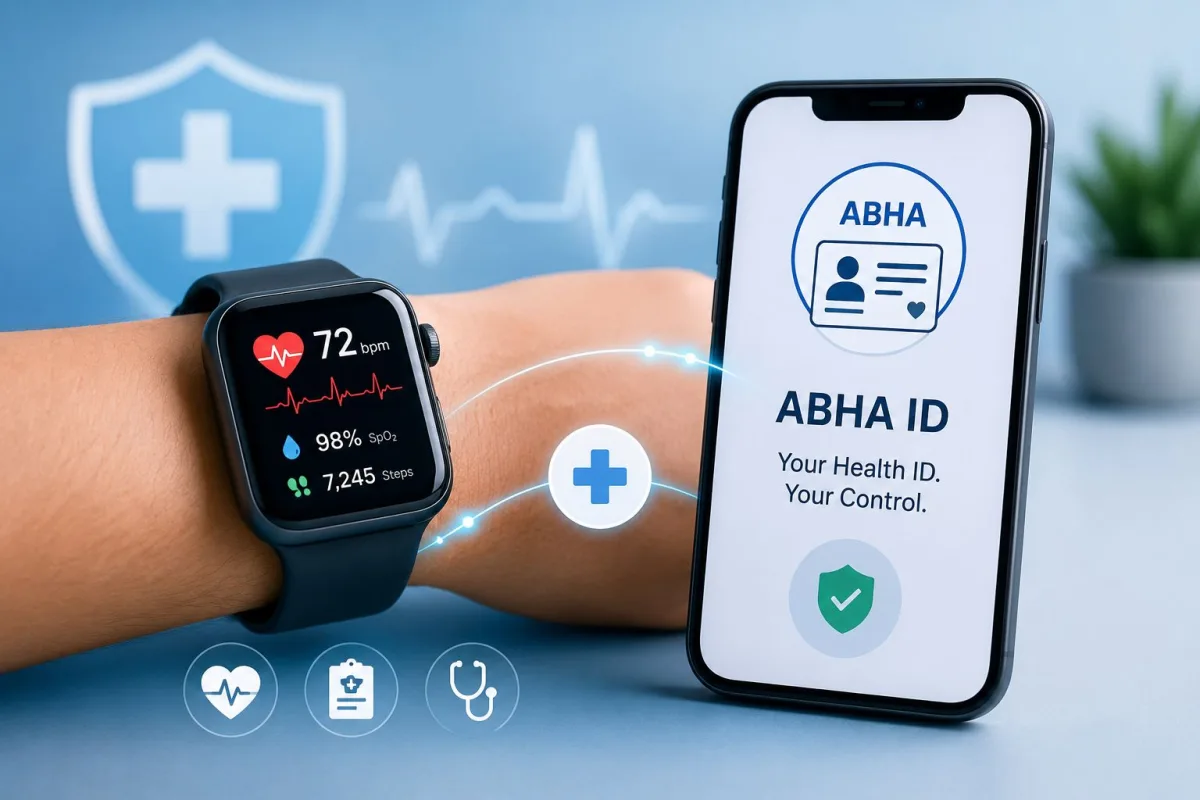
The Indian government has activated a feature that connects your daily fitness tracking directly to your medical records. The rollout of ABHA ID integration with smartwatches means the heart rate and sleep data sitting on your wrist can now be officially shared with your doctor. This is a massive shift from the days of carrying thick plastic folders full of paper reports to every hospital clinic.
Over the last few years, millions of Indians generated their 14-digit Ayushman Bharat Health Account number. Most people did this because a hospital reception desk asked them to during the registration process. Now, the National Health Authority is making that number actually useful for daily health management.
Moving data from your wrist to your doctor
Until recently, the data collected by your wearable devices stayed isolated. You could see your daily steps or irregular heartbeat alerts on your phone screen, but your doctor had no easy way to access that history. They had to rely on whatever you remembered to tell them during a quick consultation. You might mention that your heart felt weird last Tuesday, but you had no hard data to back it up.
The Ayushman Bharat Digital Mission has changed the fundamental plumbing of Indian healthcare. The system now allows authorized wearable devices to push data directly into your personal health record. When you visit a clinic today, you can grant the doctor temporary access to this continuous data.
This is not a blanket upload of every single step you take. You have to actively choose which data points get synced. Most users opt to share critical metrics like continuous heart rate, blood oxygen levels, and sleep apnea alerts. Devices from premium brands like Apple and Samsung support this flow. Local brands like Noise and boAt are also integrating through common health aggregators.
The rise of wearable medical devices in India
India has a booming wearable medical device market. Walk into any metro train in Delhi or Mumbai and you will see smartwatches on almost every wrist. While many are basic fitness bands meant for counting steps, the premium segment now features medical-grade sensors capable of taking an ECG or measuring blood pressure.
This hardware upgrade matters because hospitals are finally updating their software to match. The All India Institute of Medical Sciences (AIIMS) in New Delhi recently developed a specific smart doctor tool. This clinical decision support system is designed to look at patient histories and help doctors diagnose conditions faster.
Feeding accurate long-term data from smartwatches into hospital software gives doctors a massive advantage. Someone managing hypertension can have their daily blood pressure readings and heart rate variations automatically logged. The doctor sees a clear trend line over three months instead of relying on one stressful reading taken manually at the clinic.
How to connect your smartwatch to your health account
Linking your device requires a few specific steps on your mobile phone. You cannot just tap your watch against a hospital computer terminal.
- Open your primary health app on your smartphone, like Apple Health for iPhones or Google Fit for Android devices.
- Download a Personal Health Record application that supports the government network. The official ABHA mobile app is the most straightforward option.
- Log in using your 14-digit health ID or your registered mobile number.
- Navigate to the settings menu and look for the connected devices or data sharing section.
- Grant explicit permission for the ABHA app to read specific data points from your primary health tracker.
The system uses a digital consent manager. This means you approve exactly what gets shared. If you only want to share your ECG data but keep your sleep tracking entirely private, you can set those exact boundaries within the app.
Privacy concerns and digital health records
Bringing government IDs and personal health data together naturally makes people nervous. India has a rocky history with database leaks. You might wonder if your health insurance company will buy this data and raise your monthly premiums because you skip the gym.
The architecture of the Ayushman Bharat system is built differently from older government databases like the early versions of Aadhaar. It operates as a federated network. The government does not store your smartwatch data in a massive central server in Delhi. The data lives on your phone or in a secure digital locker of your choosing.
When a hospital wants to see your records, they must send a digital request. You receive a One Time Password on your phone. Once you approve it, the data travels securely from your device to the doctor's screen for a limited timeframe. You can revoke this access at any point.
The most vulnerable part of the healthcare data network is not the server architecture, but the tendency of users to blindly click "allow" on every permission pop-up they encounter on their phones.
Scammers are already trying to exploit consumer confusion around these new digital tools. We have seen instances where patients receive fake SMS messages claiming their health account will be deactivated unless they click a link to verify their medical history. You must understand that genuine hospitals will never ask for your health data via a random WhatsApp link. If you encounter suspicious requests, treat them as medical data frauds and report them to the national cybercrime helpline at 1930.
Remote patient monitoring in rural areas
The most useful application of this technology actually happens outside the big metro cities. India has a severe shortage of specialist doctors in rural areas. Getting a second opinion usually involves a long and expensive bus ride to a tier-one city hospital.
With smartwatch integration, a local village clinic can equip a recovering patient with a connected wearable device. The patient goes back to their home, and the device continuously logs their vital signs. A specialist doctor sitting in a Bangalore hospital can monitor these vitals in real-time. If the patient's oxygen levels drop dangerously low, the software flags the doctor immediately.
This approach turns a consumer electronics gadget into a serious remote patient monitoring tool. It bridges the physical distance between rural patients and urban specialists. The integration offers a practical fix for an infrastructure problem that traditional hospital building programs have not solved.
Will your doctor actually use this data?
Setting up the technology is one thing. Getting tired doctors to actually look at it is another problem entirely. Many doctors in crowded government hospitals barely have five minutes to spend with each patient. They do not have the time to scroll through six months of sleep data on an iPad.
This is where new artificial intelligence tools come into the picture. Systems like the clinical decision support tool built at AIIMS do the heavy lifting in the background. They scan the continuous data dumped by your smartwatch and flag only the anomalies. The doctor only looks at the exact moments when your heart rate spiked irregularly. This saves them precious time while giving them far better diagnostic information.
Private hospital chains in India are moving faster on this integration. Many large corporate hospitals have already connected their native patient booking apps with the government health network. They actively encourage patients to link their smartwatches to speed up the triage process before admission.
Managing your health data actively
You have to decide if this integration makes sense for your specific medical situation. If you are young, perfectly healthy, and only use a smartwatch to count your daily 10,000 steps, linking it to your health account might just add unnecessary clutter to your permanent medical file.
But if you are managing a chronic condition like diabetes or heart disease, this feature is highly practical. It gives your healthcare provider a factual record of your condition between physical visits. You do not have to try and remember exactly when you felt dizzy last week. The data speaks for itself.
Start by downloading the official health application and ensuring your 14-digit number is active. Look through the privacy settings before doing anything else. Connect your device and see how the data formats on the screen. Taking control of your digital medical records now will save you a massive amount of paperwork during your next hospital visit. If you want to understand more about the underlying infrastructure that makes this possible, you can check out our explainer on the national digital health rollout.