If you've ever written a thesis or worked on a research project in India, you know the exact frustration. You spend hours hunting for the perfect paper. You finally find it. You click the link, and a massive paywall blocks your screen asking for $39 to read a single PDF. That's roughly 3,200 rupees for an article you might only cite one time.
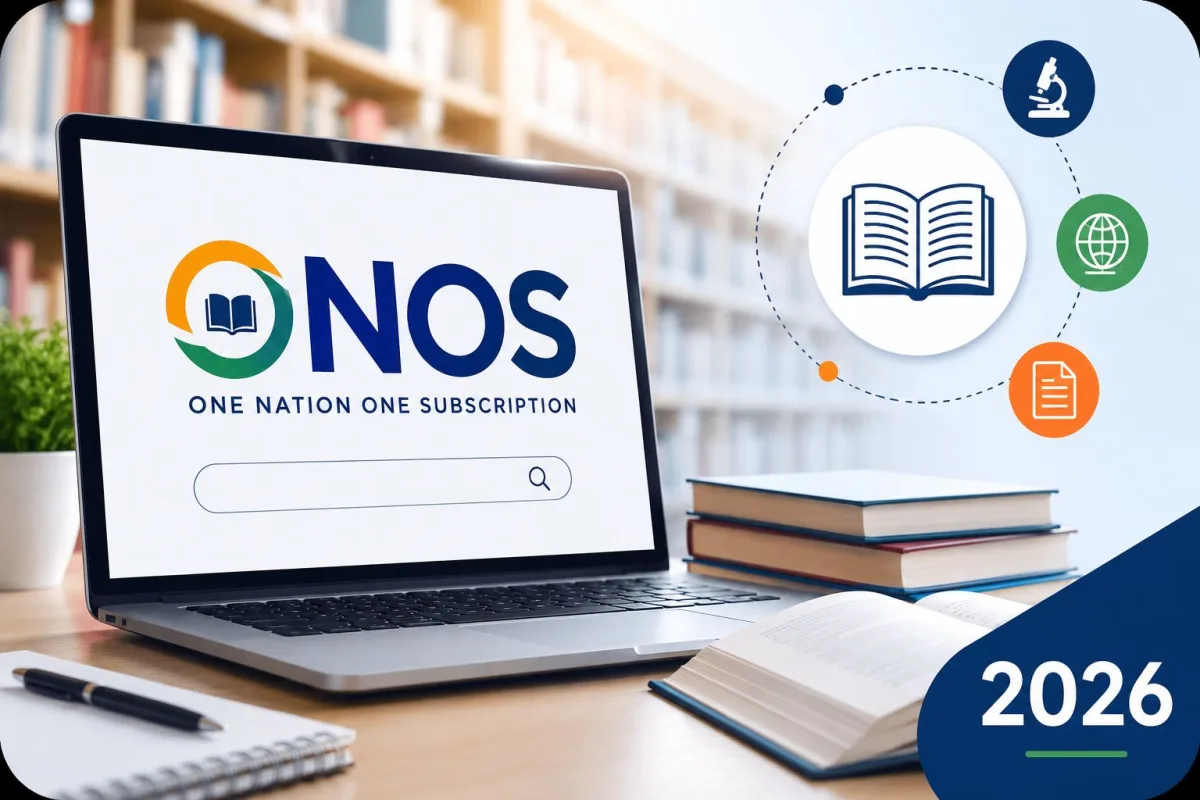
Indian students relied on shadow libraries and proxy networks for years to do basic work. But things changed recently. The One Nation One Subscription (ONOS) portal is fixing this broken system. Honestly, it's a rare government tech initiative that works exactly as advertised.
Indians downloaded over 11.3 crore research articles through the system since launch. I looked at the recent data. Institutions like IIT Madras and Delhi University are dominating the usage charts. Banaras Hindu University (BHU) is pulling massive numbers too. This is how public technology should work. You remove the financial barrier. People naturally get the knowledge they need (which makes sense, actually).
The actual problem with academic publishing
We need to talk about why academic publishing is a mess. Basically, it's a racket. Researchers do the hard work. Taxpayer money funds their grants. They write papers. They review other papers for free. Then massive global publishers lock these papers behind paywalls. They sell them back to the same universities at crazy prices.
An average Indian state university can't pay millions of rupees for access to every major journal.
So this creates a massive divide. Students at elite institutions get global knowledge. Students at smaller colleges get left behind. In my experience, they end up relying on outdated library books. Or they beg authors on Twitter for PDF copies.
The ONOS scheme flips this. The Indian government steps in instead of thousands of colleges negotiating deals. They negotiate a single flat fee with major global publishers for the whole country. It's a giant nationwide Netflix account for academic journals.
Who gets to use the ONOS portal right now
The Cabinet approved this plan. We are seeing the results of the rollout right now. We're a year into this experiment and the access net is incredibly wide. If you're enrolled in a recognized higher education institution in India, you probably have access.
This includes students and faculty at central universities. State universities are covered too. It includes IITs and NITs, along with IISERs. Research labs under the CSIR and ICMR are in the system. ICAR is also included. You don't need to be a PhD candidate to use it. Undergraduates have the exact same access privileges.
Recent discussions at the National SAMAVESHA 2026 event at IIT Delhi focused heavily on this. The goal is to strengthen the research ecosystem. They understand that a breakthrough in material science is just as likely to come from a student in a tier-2 city as a researcher in a metro area. If you ask me, that's exactly how science works.
How to actually access papers for free
You might be wondering where the actual ONOS website is. Thing is, you don't usually go to a standalone government app to use this. The system integrates directly into the workflows you already use.
Here's how it generally works for most students.
- You log into your university's digital library portal or campus network.
- You search for the journal or article you need on publisher websites.
- Because your institution's IP address or single sign-on is registered with the national registry, the publisher recognizes you as an Indian academic user.
- The paywall disappears. You just click download.
There are no credit card prompts. You don't have to mess around with VPNs or sketchy proxy servers. It's seamless. Publishers like the American Society for Microbiology (ASM) officially joined the initiative. Their entire catalog is open to you now. I'm not sure exactly why it took so long for this to happen.
Walk into your campus library if you aren't sure if your college is connected. Ask the librarian about their ONOS integration.
Many colleges have specific single sign-on portals. So you can access these journals from home. You don't have to be physically connected to the campus Wi-Fi.
Why this beats relying on pirate sites
Look, we have to address the elephant in the room. Platforms like Sci-Hub were the only way Indian researchers survived for over a decade. I know senior professors who openly admit they built their entire thesis using pirate sites. It's a very common reality.
But relying on shadow libraries is a headache. ISPs block the domains frequently. The URLs change every other month. You are never entirely sure if the PDF has the high-resolution supplementary charts you need for your lab work. Sometimes the files are just broken.
ONOS is legal. It's vastly superior from a technical standpoint. You get the actual publisher formats when you access a paper through official channels. You get the raw data files. You get the easy citation export tools for Zotero or Mendeley. You aren't dealing with a scanned PDF with missing pages. You're using the academic tools exactly as they were meant to be used.
The catch and what needs fixing
I'm genuinely impressed by how well this rolled out. But it isn't flawless. We need to be realistic about the current limitations here.
First, not every global publisher is on board yet. The government has negotiated with the majority of the big players. There are still holdouts though. You might still hit a paywall if you need a highly obscure journal published by a small European society (annoying, I know). The negotiations are ongoing. It just takes time to get everyone to agree to a country-wide pricing model.
Second, access for independent researchers is a mess. The system is deeply tied to institutional affiliations right now. Getting into the system is frustrating if you're an independent journalist or a citizen scientist. Startup founders working from home face the same issue. You simply don't have a university email address.
The government needs to build a direct citizen login gateway. We have the infrastructure. They could link this to Aadhaar or DigiLocker. You should be able to verify your identity and read the research your tax rupees help fund if you're an Indian citizen. I'd love to see this in the next iteration of our digital public infrastructure.
The massive awareness gap
The biggest hurdle right now is simple awareness. IIT Madras and Delhi University are pulling massive download numbers. Their internal communication is excellent. Their librarians actively teach students how to use the system.
Walk into a smaller regional college. Ask the students if they know what the One Nation One Subscription portal is. Most will give you a blank stare. They are still paying out of pocket for basic literature reviews. Or they just give up. The numbers here are a bit fuzzy, but the gap is obvious.
You cannot build a knowledge economy if the people who need the knowledge don't even know it is free.
We need aggressive outreach. State education boards need to run mandatory orientation sessions on this for every incoming college freshman. It should be as common as getting your college ID card.
Giving millions of students unrestricted access to global scientific literature is a big deal. It changes everything. The days of struggling to pay for a 15-page PDF are mostly over. Next time you're doing research and hit a paywall, stop. Check your university portal. The access is already paid for.