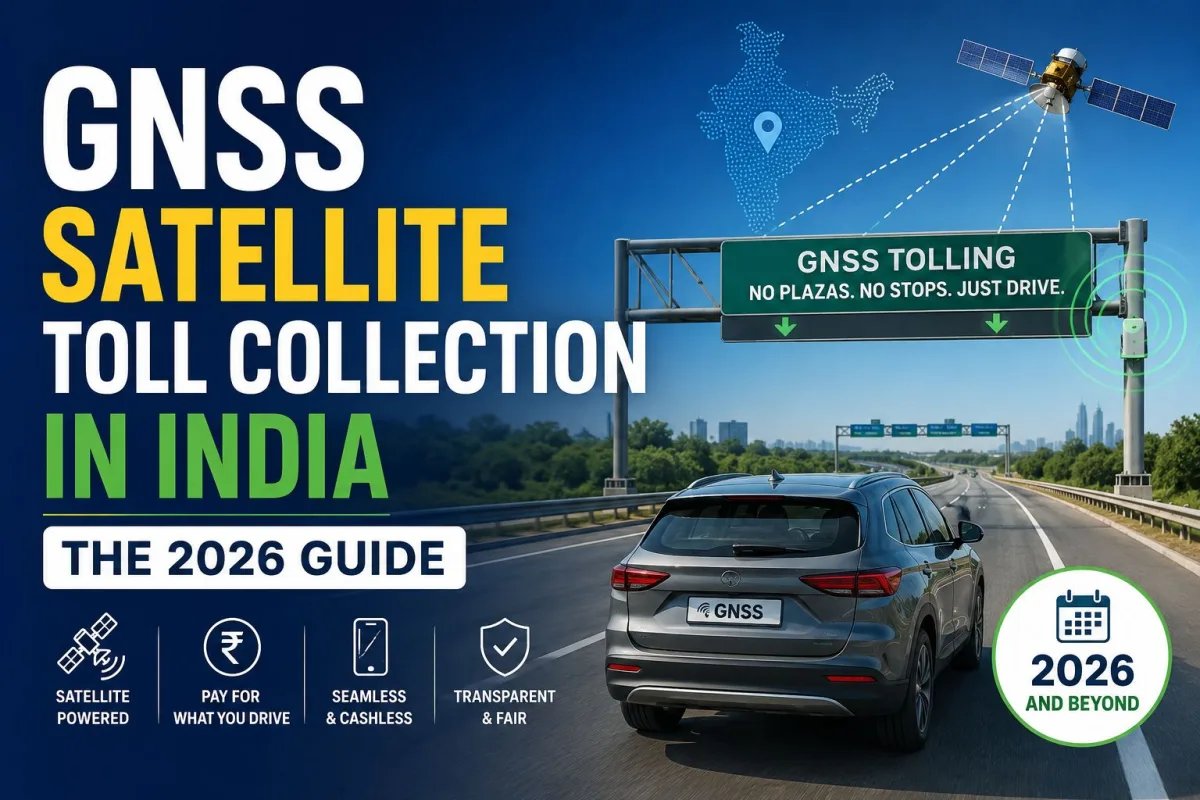
We finally figured out FASTag. We glued the RFID stickers to our windshields, linked our bank accounts, and learned to endure the occasional scanner malfunction. Now, the Ministry of Road Transport and Highways is changing the rules again. The government is pushing for GNSS Satellite Toll Collection in India, aiming for a broader nationwide rollout by the end of 2026. This new system charges you based on the exact distance you drive, rather than making you pay a flat fee at a physical toll booth.
If you read the recent headlines, the timeline looks confusing. Initially, there were talks of a May 2025 launch. The government recently clarified that they have deferred the immediate nationwide rollout. Instead, they are taking a slower, more deliberate approach. They will test the technology with commercial trucks and buses before forcing private car owners to adopt the new hardware.
How GNSS toll collection works on Indian highways
The technology relies on the Global Navigation Satellite System. This is the same network of satellites that powers the maps on your smartphone. To make this work for highway tolling, your vehicle will need a physical device called an On-Board Unit, or OBU. Think of it as a highly accurate GPS tracker specifically for your car.
The OBU communicates constantly with satellites to map your coordinates. When you enter a tolled national highway, the system logs your entry point through digital geofencing. As you drive, it calculates your precise distance. When you exit the highway, the software tallies the kilometers and deducts the exact amount directly from your linked wallet or bank account.
You will not see boom barriers. You will not see long queues of trucks waiting for a scanner to read a dirty windshield tag. The physical toll plazas themselves will eventually be demolished.
The financial benefit for local commuters
This shift matters because it changes how we pay for infrastructure. The current system asks you to pay 100 rupees at a plaza whether you drove 50 kilometers or just five kilometers past the booth. I think the satellite model fixes this bad math. You pay for exactly what you use.
Imagine you live in a town that sits just a few kilometers away from a major toll barrier. Under the current FASTag setup, if you cross that barrier to drop your kids at school, you pay the full fee. The financial burden is heavy for local residents. If you drive five kilometers under the new GNSS system, you pay exactly for five kilometers. The per-kilometer rate will be standardized by the NHAI, meaning local commuters will save a lot of money over a year.
Why FASTag is being replaced by 2026
FASTag was a massive upgrade over handing cash to a toll operator. It reduced waiting times from ten minutes to under a minute. But a minute is still too long when thousands of cars pile up during Diwali or long holiday weekends.
Physical toll plazas require massive parcels of land. They force vehicles to brake, stop, and accelerate, which burns excess fuel and increases pollution. Highway authorities also lose revenue when FASTag scanners fail and operators simply open the gates to clear traffic jams. Another persistent issue with FASTag is the hardware itself. The RFID stickers degrade in the hot Indian sun. When scanners fail, operators use hand-held devices, holding up fifty cars behind you. Sometimes, the system glitches and deducts the toll amount twice. Resolving these double deductions requires calling customer support and waiting weeks for a refund.
By moving to a satellite network, the government eliminates the physical bottleneck. Cars can maintain highway speeds without ever slowing down for a transaction.
The Ministry of Road Transport and Highways has confirmed that the new system will run alongside FASTag initially, ensuring a smooth transition before physical toll booths are permanently retired.
The backup plan: Automatic Number Plate Recognition
Satellites alone are not foolproof. Bad weather, tunnels, or hardware glitches can break the connection. To prevent toll evasion, the government is installing Automatic Number Plate Recognition (ANPR) cameras along the highways. If your OBU loses signal, these cameras capture your license plate and cross-reference it with the vehicle database to calculate your bill. This hybrid approach ensures that the system works even when satellite coverage drops.
Privacy concerns with continuous GPS tracking
This is where the conversation gets complicated. A system that charges you by the kilometer must know exactly where you are. For this to work, the government needs access to your real-time location data whenever you are on a national highway.
The idea of a mandatory tracking device in your personal car sounds like a concept from a science fiction movie. The NHAI requires your location data solely to calculate distance. They have promised to use software that anonymizes data and purges trip histories after the payment clears. But India's digital privacy regulations are still taking shape.
Many drivers are uncomfortable with this level of surveillance. Unlike a smartphone where you can turn off location services, the OBU must remain active. If you disable it, you risk heavy fines for toll evasion. The government has stated that the tracking only applies to designated tolled roads. Once you exit onto a city street or a state highway, the tolling software stops calculating your distance. You can read more about current data protection policies in our detailed tech explainers.
What you need to do right now
Right now, you do not need to do anything. Do not rip the FASTag off your car. Do not panic about buying new devices. The rollout is heavily delayed and will happen in slow stages.
The initial phase focuses entirely on commercial vehicles. Trucks and interstate buses have regular routes and make up the bulk of highway revenue. Once the NHAI fixes the inevitable software bugs with commercial transport, they will introduce OBUs for private cars.
During the transition phase, highways will use a hybrid model. Existing toll plazas will have dedicated lanes for GNSS-enabled vehicles. These cars will drive straight through without stopping, while older cars will still use the standard FASTag lanes.
You should be extremely careful about misinformation during this period. Scammers love a confusing technology rollout. You might receive fake SMS messages claiming your FASTag is banned or offering to sell you a mandatory GPS tracker. Never click on random links or pay unauthorized agents. If you want to know how these frauds operate, check out our latest scam alerts guide.
Expected device costs and installation
New cars manufactured after 2025 might come with built-in OBUs directly from the factory. For older cars, you will need to purchase an aftermarket device. We do not have official pricing yet. Industry estimates suggest these devices will cost more than a standard 100-rupee FASTag. The government might subsidize the initial cost to encourage fast adoption, similar to how they promoted digital payments earlier.
You will link the OBU to your bank account using the same infrastructure that handles UPI and electronic clearing. If you are already comfortable scanning QR codes and using digital wallets, the payment side of this new system will feel very familiar. We frequently cover updates on digital payment systems in our daily tech news section.
The reality of Indian highway infrastructure
Building the software is the easy part. Making it work flawlessly across the diverse Indian landscape is a massive engineering challenge. India has heavy monsoons, dense forests that block satellite signals, and millions of older vehicles that are difficult to track.
The camera backup system will struggle with dirty license plates and heavy fog in northern India during winter. The NHAI knows these challenges exist, which is why they paused the aggressive initial timeline. Taking extra time to test the system is a smart move. A buggy toll collection system would cause massive public frustration and endless financial disputes.
India is attempting a global first in terms of scale. Germany has used a satellite-based tolling system for heavy commercial trucks for years. Russia also relies on GNSS for highway taxation. However, no country has attempted to scale this technology for millions of private cars across such a vast road network. If the NHAI succeeds, this will fundamentally change how developing nations manage public infrastructure.
We will likely see a messy transition period throughout 2026. You will probably experience billing errors, disputed distances, and confusing customer service calls. Keep track of your highway usage and monitor your linked bank accounts closely when the system eventually goes live in your state.
Summary of changes coming to your daily drive
The shift from physical booths to digital tracking changes the fundamental experience of road travel in India. Here is what you should expect over the next few years.
- Your current FASTag will remain valid for the foreseeable future.
- Commercial trucks will test the new GPS devices first.
- Physical toll barriers will slowly disappear from major national highways.
- You will pay based on actual kilometers driven instead of flat plaza fees.
- An onboard device will track your vehicle location on designated routes.
The government is taking a necessary step to modernize our highways. Removing physical barriers will cut down travel times and reduce fuel consumption. But the execution must be flawless to win public trust. Stay cautious of fake news and rely on official government portals for the latest information as 2026 approaches.