You are sitting at work and your phone rings. It is an unknown number. You pick up, expecting a call from a delivery driver or a client, but it is a recorded voice offering a pre-approved personal loan. We all hate this daily interruption. The telecom regulator has finally pushed the button on a real solution to this problem. The new CNAP Caller ID system is rolling out across India right now. The Department of Telecommunications has set a strict March 2026 deadline for a complete pan-India launch.
This is a massive shift in how telecom networks operate in our country. Instead of relying on third-party apps to guess who is calling you, the government is forcing telecom operators to show you the exact, officially registered name of the caller. This change will affect every single smartphone user in India, and it brings up serious questions about privacy, spam prevention, and how we handle unknown calls.
What the new caller ID system actually does
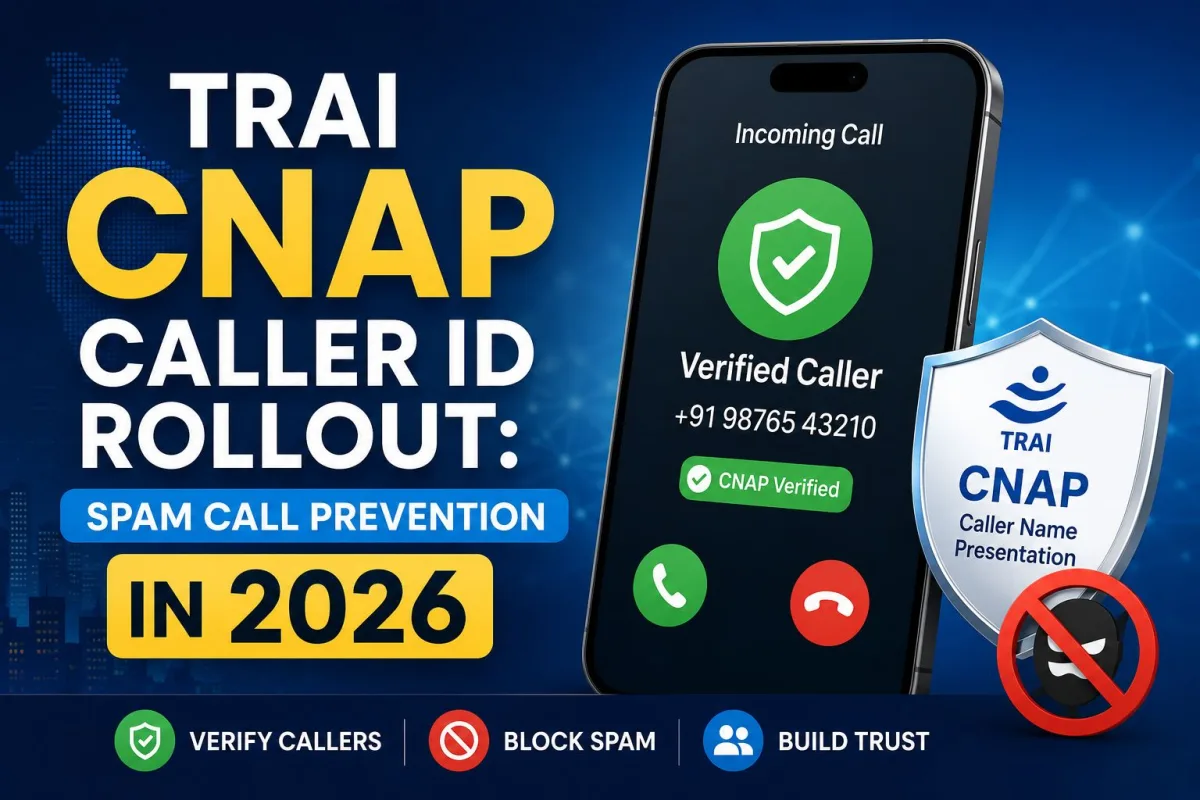
CNAP stands for Caller Name Presentation. It is a network-level feature. When a call comes to your phone, your telecom operator dips into a central database, retrieves the verified name of the person calling you, and flashes it on your screen alongside their phone number. You do not need to download a separate application to make this work. It is built directly into the cellular network infrastructure.
Every active SIM card in India requires Know Your Customer verification. When you buy a connection, you provide your Aadhaar card, voter ID, or passport. The telecom provider registers that exact document name to your mobile number. The CNAP system simply takes that official KYC name and uses it as your permanent caller ID.
If someone named Amit Verma buys a SIM card and calls you, your phone screen will display Amit Verma. It does not matter if he has never called you before. It does not matter if his number is not saved in your contacts. The network knows who he is and passes that information to your handset before you even answer the call.
Why existing caller ID apps are no longer enough
For years, Indian users have relied on crowdsourced caller ID apps to filter out spam. These apps are genuinely useful, but they have a fatal flaw. They rely entirely on what other people type into their contact books. You can learn more about how crowdsourced data is manipulated by checking our tech tools section.
If a scammer buys a new SIM card, they can ask fifty of their friends to save that new number in their phones as HDFC Bank Support. Within a few days, the crowdsourced app updates its database. When that scammer calls you, your screen says you are receiving a call from HDFC Bank Support. You trust the screen, you answer the call, and you become vulnerable to financial fraud.
The government system cuts through this manipulation. You cannot fake a KYC document easily. If that same scammer tries to call you after the network-level caller ID is fully active, the screen will show the actual name on the Aadhaar card used to buy the SIM. Seeing a random individual's name instead of a bank's name is an immediate red flag that you are dealing with a fraudster. This removes the anonymity that scammers rely on to trick everyday users.
The rollout progress and the March 2026 deadline
The telecom regulator spent years negotiating this rollout with operators. Implementing this feature is highly complex because telecom networks have to query massive databases in milliseconds to retrieve a name before the call connects. The Department of Telecommunications finally drew a line in the sand and mandated that all operators must have this working perfectly across India by March 2026.
We are already seeing the initial phases of this rollout. Vodafone Idea recently claimed they have the system live for calls within their own network. Reliance Jio is actively testing the feature to unmask fake callers. BSNL plans to launch its caller name presentation service within the next few months. You can track ongoing telecom infrastructure updates in our tech news portal.
There is a catch for users on older technology. The initial rollout heavily targets 4G and 5G networks. The data protocols required to transmit text-based names instantly alongside a voice signal are difficult to manage on legacy 2G networks. Millions of Indians who still use basic feature phones on 2G networks might not see these names flash on their screens immediately. The digital divide remains a real problem here.
Privacy concerns and your right to opt out
The biggest controversy surrounding this technology is privacy. Many people do not want their full legal name flashing on the screen of every single person they call. If you call an auto driver, a local shopkeeper, or a food delivery executive, you might prefer to keep your identity somewhat private.
The regulator recognized this problem. They made the caller ID system a default feature, meaning it will be turned on automatically for everyone receiving calls. However, they provided a mandatory opt-out mechanism for citizens making calls. If you do not want your KYC name shared with the people you dial, you can contact your telecom provider and request them to hide your identity. Your calls will then appear as a standard unknown number, just like they do today.
The regulatory framework explicitly separates individual citizens from commercial entities. While normal users can request privacy, businesses and registered telemarketers have zero option to hide their identities.
This separation is the core of the spam-fighting strategy. Telemarketers must display their registered corporate names. If a third-party call center is dialling numbers on behalf of a real estate firm, the caller ID will expose exactly which call center is bothering you. They can no longer hide behind anonymous ten-digit numbers.
Changing how we handle telecom fraud
Financial fraud in India is a massive crisis. Thousands of cybercrime complaints are filed daily on the national 1930 helpline. Most of these crimes begin with a simple phone call from an unknown number. Read our scam prevention guide to understand the exact tactics fraudsters use once they get you on the line.
Forcing real names onto phone screens raises the barrier to entry for casual criminals. Scammers buy pre-activated SIM cards from the black market, often registered under fake names or stolen identities. While the new caller ID system will not stop this completely, it adds friction. If a scammer is operating twenty different phone lines using different stolen identities, keeping their stories straight becomes much harder when the victim can see the registered name.
Telecom operators will also use this data to aggressively block numbers. If thousands of users start rejecting calls from a specific KYC-registered name because they recognize it as spam, the network can flag that identity entirely, shutting down all SIM cards associated with that specific Aadhaar or voter ID.
What to expect over the next year
You do not need to do anything right now to prepare for this change. Over the next year, you will slowly start seeing real names appear on your phone screen when unknown numbers call you. The frequency will increase as telecom operators expand their database sharing agreements with one another.
The system will be messy at first. You will likely see outdated names if someone is using a SIM card registered to a family member. You will see spelling errors based on how a local mobile shop typed the name into the system ten years ago. These data quality issues will take years to iron out completely.
Despite the early technical hurdles, forcing transparency onto the telecom network is a massive win for everyday users. The era of the completely anonymous phone call is ending. By March 2026, when your phone rings, you will finally know exactly who is demanding your attention.